 Carlos Ufano
How are incidents currently managed?
Generally speaking, the management of issues in a residents’ association varies greatly. So much so that it is impossible to define a standard process for all of them; there are many different ways of organising it, but among these we can highlight the most common:
- Residents report issues to the chairperson, either via WhatsApp or by phone, and the chairperson passes them on to the property management company when possible, either by email or by phone. And then… well, then things simply get sorted out bit by bit.
- Residents report issues to the chairperson, either via WhatsApp or by phone, and the chairperson forwards them to those involved in resolving them, such as the property management company, maintenance staff or any service provider.
- Residents report issues directly to their property management company. Usually via email, on the management company’s website or by phone. Once the issue reaches the management company, things are gradually sorted out.
- Residents report incidents via an app provided by the property management company. The management company handles and resolves them, usually informing residents when they have been resolved.
Obviously, almost none of these options is the most suitable. Some because they involve different channels for reporting, with intermediate parties that often become bottlenecks, and furthermore, communication between all parties is usually non-existent or severely lacking.
We can certainly use technology to improve these processes, using a channel that is convenient for everyone, sharing information amongst all parties, and centralising the entire reporting process to improve it or to be able to estimate the necessary resources in the future. If we manage to change this process, the benefits will reach all parties involved, not just the residents. Incidents may be resolved more quickly, information flows will become clearer, and ultimately all parties will be happier to have their work clearly defined and scoped. And this is undoubtedly easier to achieve with a suitable incident management tool.
Let’s take it step by step: what is an incident and what types are there?
Indeed, this is an important point to define. We must be aware that an incident in a residents’ association can be a vaguely defined concept, and for some residents it will mean one thing, whilst for others it will mean another. There are even residents who might view the need to change the bank account into which the association’s fees are paid as an incident, whilst others treat this issue simply as another administrative task to be dealt with by their property management company.
In other words, we must be aware that incidents are normally problems that occur within a residents’ association, which usually have a technical origin and whose resolution depends on a maintenance service managed by the property management company or someone in charge of that process. There will be residents who report as incidents issues that are actually problems of coexistence between residents or personal problems that do not relate to community matters. But that is normal, and we must be prepared to handle it all the same; or at the very least, our tool must take that possibility into account.
Which tool should be used for incident management?
What we must be clear about is that an incident management process must be supported by a technological tool that allows us to report and monitor the entire management process, particularly in the context of residents’ associations where there are different parties interacting with one another, each with their own interests at stake.
In our view, this tool should have the following basic features:
- Status tracking. The tool must allow all parties to know at all times what stage an incident is at, as well as who has been involved in each stage and what information has been added.
- Easy reporting. It must allow anyone to report incidents quickly and easily. This includes the ability to add information such as photographs and videos to the report, to obtain as much detail as possible for its resolution.
- Use by all parties. All potential stakeholders who may be involved in managing an incident must be able to participate equally in the tool that supports them. In other words, the resident can report it, the chairman may need to view its status, the property manager can manage and assign it, the maintenance staff can resolve it, the insurance company may require an assessment, and the external service provider may, as a last resort, provide information on the final status following resolution.
- Adapting to the environment. By this we mean that the environment of residents’ associations is very specific, and therefore unusual processes arise that need to be supported. For example, there are occasions when the incident may be reported by a caretaker rather than a resident. Or there are times when an incident does not necessarily need to reach a final resolution, as there are instances where the reported issue does not require it.
- Enabling notifications. As mentioned, incident management involves the participation of various parties, including both companies and individuals who may interact with one another. Therefore, the tool must notify each party of the incident’s progress, ideally in real time.
- Report generation. Finally, the tool must be able to generate reports at different levels, enabling overall monitoring and the implementation of improvement measures in the future.
With all these basic functions, we should have enough to manage incidents within our Community. Although, obviously, there are many issues that need to be defined in greater depth in order to have a tool that is 100% tailored to our needs.
Our incident management tool
At Onzane, we have built our own tool specifically designed for residents’ associations. It is a versatile tool, easy to set up, and covers all the aspects typically required in these settings. It is also an open-source tool that can be expanded as needs change and is customisable, as not all residents’ associations have the same requirements.
Our incident management tool is another module within our Onzane platform, which includes the Onzane App for residents and staff, and the web application for the community’s administrators and maintenance providers.
If you’d like to see how residents can report incidents via our app, here’s a video showing you how:
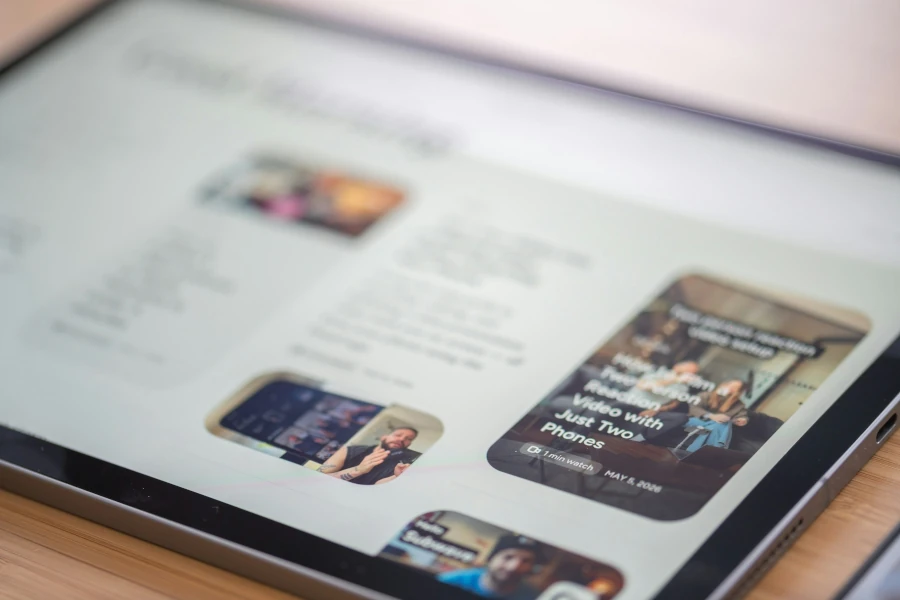
As you can see in the video, residents can report incidents using our app for residents’ associations. The report can include text, as well as photographs and even video, to provide as much detail as possible about the problem.
These reported incidents can then be managed by the administrators (Chairperson, property management, etc.), and can be assigned to the community’s staff (Maintenance, Cleaning, Concierge, Security, etc.) or to the community’s service providers.
 01
01
 02
02
 03
03