 Carlos Ufano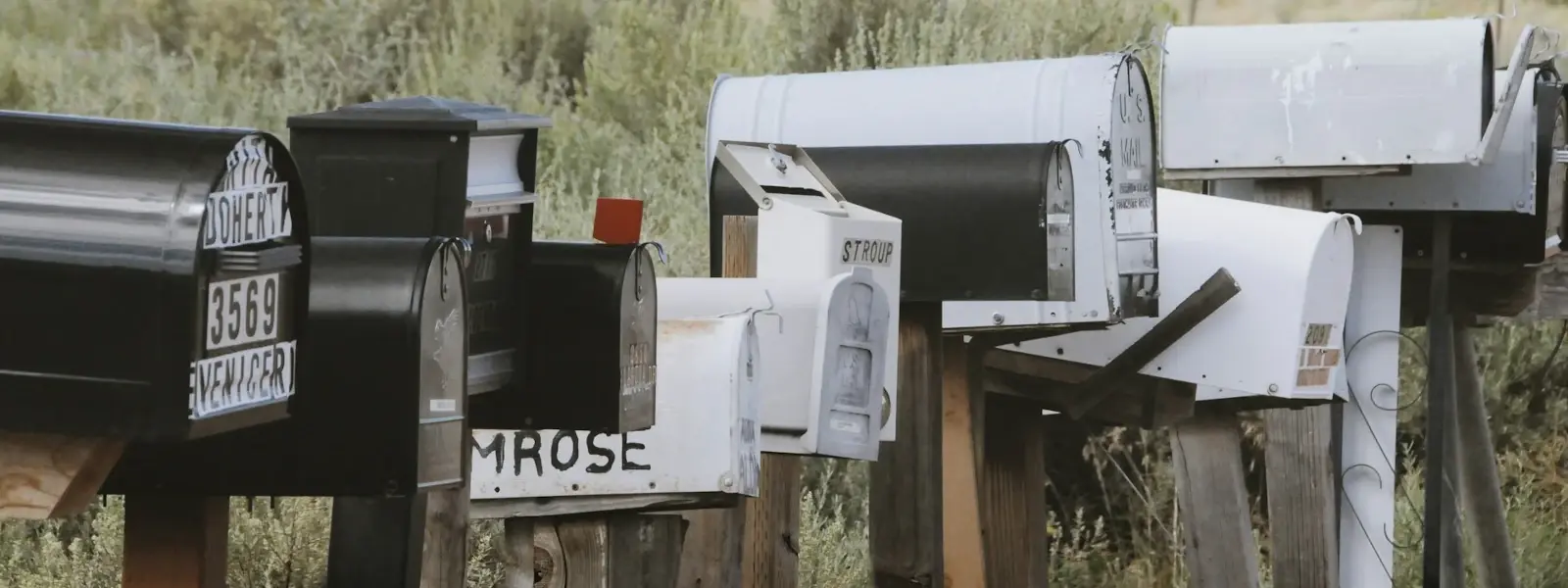
What about notifications to residents of the housing association?
After so much time working with residents’ associations, I can assure you that the first complaint residents usually make about the management of their association concerns communication. Specifically, the communication they receive from their property management company or governing board regarding matters of interest to them.
And I’m not referring to the content of these communications, nor even to the number of them; I’m referring to something as simple as the fact that they don’t reach everyone. Or at least, not everyone can view them when and how they want to. Something that shouldn’t be a problem in today’s age of communication remains the Achilles’ heel of many housing communities and the source of other related problems, as residents are not kept up to date on issues of importance to them.
It is clear that the number of notices and even their content should be in line with the type of housing association in which we live. There are housing estates where there is barely any interaction between residents and where daily life in the estate revolves exclusively around monitoring the payment of service charges. These are usually older estates, where there are no communal services other than heating and the lift, and where residents have no interest in improving certain aspects of the estate.
There are other communities, however, which are the exact opposite: where there are communal areas that need to be booked, shared utilities such as water or electricity, certain automated features, and even where life amongst the residents is rich and comfortable. Logically, community managers have much more to report in this second type of community. It is more likely that there will be more decisions to make, changes to implement, and areas for improvement. It is also quite possible that residents’ interests lie in improving their daily lives through small, practical steps.
But setting aside such contrasts, the way in which administrators communicate these changes, decisions, or matters affecting the community to residents varies greatly and remains an unresolved issue to this day.
But who are the neighbours?
Well, yes, just as you read it. Incredibly simple, yet rarely found in a residents’ association. I can assure you that it is almost impossible to find an association that has an up-to-date list of owners containing even the minimum required information: property name, owners’ first and last names, and contact details.
Often, not even the property manager has this information. And we’re not saying it’s their fault, but that’s the reality. Residents don’t usually update their contact details and don’t usually report changes to their properties. And they certainly don’t report the tenants living there. Although it should be mandatory and logical, this generally doesn’t happen.
That is why, in our Onzane app, every resident can easily update their contact details: they can change their information via the app simply by updating their first and last names and email address. Instantly and from anywhere. But they can also use a feature included in all our Pro plans, which allows them to easily report any other changes to their details and verify that the property manager receives them and updates them where necessary.
And this method of updating information also includes details about tenants. Each resident can specify for their property whether it is let and provide their tenant’s contact details. The property manager can easily contact these tenants via the app, and there is no need for residents to contact the manager individually to inform them of any changes.
I haven’t received the notice
Once it is clear who the residents of a community are, the next problem that usually arises stems from a trait common to most people: passing the buck. The problem isn’t mine, it’s the other party’s. In other words, once we have clear and up-to-date contact details for the neighbour, and we proceed to send the necessary notices to those contacts, the neighbours complain that they haven’t received them, that no email has arrived, or that nobody has left anything at their home.
And it doesn’t matter what method of contact is used—be it post, email or the infamous notices stuck up in the block’s lift—there are always residents who say they haven’t been informed because nothing has reached them. Whether there are 20 or 300 residents in the block, there is always a certain percentage in this situation. And it is clear that the means of contact usually employed do not allow for delivery verification, but it is also true that it is too much of a problem to always have a percentage of people who are overlooked.
These are the problems we have encountered with each of the methods used:
- Post: almost nobody uses it, it is very expensive and, moreover, it does not guarantee delivery, not even on time. In other words, in the 21st century there are still residents who want to receive notices by post, and of course, that means the cost of doing so is high or very high depending on the frequency of the mailings. Furthermore, we cannot guarantee that residents will receive it, or even that they will receive it on time, as it may be delayed, or they may not be at home for various reasons, such as being away on a trip, it being a second home, living in another country, etc.
- Email: in theory, a fast means of delivery that should work properly. However, there are two inherent problems with it: that we receive hundreds of emails and that the technology behind email still does not guarantee effective delivery: emails often end up classified as spam and ultimately unread. Many residents complain that they have to search for emails amongst all the ones they receive, that they delete them accidentally, or that they marked them as spam and have not received them since.
- A notice on the noticeboard: not even if it’s signed by the chairperson. It’s a long shot to imagine that everyone will read it. It never happens and never will, as there are many reasons why, and there will always be some even more unlikely one that ends up happening and prevents us from reading it in time.
Self-management of the communication channel
And after everything described above, we came up with an idea to improve this communication system, which ultimately involves allowing each resident to manage it themselves. In other words, each resident chooses the method by which they wish to receive notifications that announcements of interest have been issued. In our case, the possible methods are push notifications on a mobile phone or email (or both).
In addition to this self-management, our app features a dedicated repository solely for announcements. These cannot be deleted by residents. For every announcement sent by the administrator, it is saved in a repository of announcements which every resident can access at any time, sorted by date and including all attached documents. We can then choose how we wish to be notified of each new announcement issued, either via push notification or email. In the first case, our mobile phone will instantly alert us to its existence as soon as it is issued. In the case of email, in addition to a notification of its existence, we will receive the content of the notice in the email itself, in case we do not wish to open the app. But in any case, it will always remain stored in the notice repository within the residents’ app.
Improving the distribution of announcements
Once we have the notification and storage process dedicated to a section of the app, other types of problems arise that we can also solve with a little imagination.
For example, we have associations comprising several communities where the administrator might wish to send notices only to a specific community, not to the entire association. We have resolved this by allowing the administrator to specify, when sending the notice, which group of properties it should be sent to.
Another example: there are cases where administrators do not want residents to be notified of the dispatch of a particular notice. These are rare cases, but for notices of minor importance or in communities that receive a large number of notices, this need occasionally arises. In our app, the administrator can choose whether or not to notify residents of a particular notice.
A final example: on many occasions, notices require an attached document, which either supplements the content of the notice, expands upon it, or simply duplicates it in an official capacity. In many community apps, viewing these attached documents is done outside the app itself, using the required document viewer. In our app, if the document is a PDF (95% of the time) or an image (the remaining 5%), the attachment is viewed within our app, which avoids many problems as it does not depend on the resident’s mobile phone having a programme to view PDFs or images.
In short, notices sent using our app are read 25% more often than when using traditional methods, and this is of the utmost importance when we are talking about information relevant to residents. With our system, we avoid, on the one hand, administrators having to update residents’ contact details, and on the other, having to decide which notification method each resident prefers. In the Onzane app, the administrator simply creates a new notice and each resident receives a notification they have selected themselves, and all notices are stored in a repository that can be consulted at any time.
If you’d like to see how residents can view the notices they receive via our app, here’s a video that shows you how:
 01
01
 02
02
 03
03